
From the President's Desk
Snippets from the Board
New RVRA Education Centre Webinars & Videos
Opinion Piece - Wellness Management
Why Does the NSW RVRA Allow Operators and Managers to Become Associate Members?
Budget Meeting Best Practice
Letters to the Editor
Senior Australian of the Year - Professor Henry Brodaty AO
Travelling to the UK? New Entry Requirements
FYI - Important Information Links - Compass, Scam Alert, Be Connected
NSW Women's Week & Seniors Festival 2026
Help Support YOUR Association - for the future
RVRA Supporters

Hi everyone
As we begin 2026, this President’s Report outlines the key developments shaping the NSW retirement village sector and what they mean for residents and committees in the months ahead.
The past six weeks have again been a busy and significant period for the retirement village sector in NSW and nationally. While we remain focused on NSW issues, developments in other states continue to influence operators who work across multiple jurisdictions and shape broader industry policy discussions.
Some key sector happenings over the past six weeks are as follows:
- Wellness Management Debate & Sector Response
- Budget Season Preparation & Recurrent Charges
- Community, Choice and Contractual Integrity
Wellness Management Debate & Sector Response
The issue of “wellness managers” or expanded support roles in retirement villages has generated considerable discussion following recent media articles and commentary from resident associations and operators.
Key points for residents, committees and associations:
- A number of operators have indicated plans to introduce wellness or support coordination roles into villages, initially at no cost, with longer-term funding proposed through recurrent charges.
- Resident responses across NSW have highlighted concerns about contractual fairness, particularly where existing contracts did not include such services.
- The debate has drawn a clear distinction between voluntary neighbourly support and professionally funded services.
- Questions have been raised about whether such services should be optional, user-pays, or funded through existing government programs such as Home Care Packages.
Implications for residents & committees:
- Committees should carefully examine any proposal that introduces new costs or services and request full written explanations before budgets are finalised.
- Residents are encouraged to check whether their contracts permit the introduction of new services funded through recurrent charges.
- Villages considering wellness roles should explore alternatives such as optional services or external funding rather than blanket charges to all residents.
- This issue reinforces the importance of resident consultation and contractual transparency.
Continued below...
Budget Season Preparation & Recurrent Charges
Many villages are now preparing draft budgets for the 2026 financial year, with cost pressures continuing to affect operating expenses.
Current developments:
- Insurance premiums remain elevated, with further increases reported in some regions.
- Utilities and contracted services (gardening, cleaning, security) continue to rise above CPI in many villages.
- Operators are increasingly using “below CPI” budget mechanisms to introduce new costs without triggering formal objection processes.
Implications for residents & committees:
- Committees should request early sight of draft budgets and supporting explanations for major cost increases.
- Particular attention should be paid to any new line items or service additions that were not previously part of village operations.
- Residents should be aware of their rights to question and seek clarification on recurrent charge changes.
- Transparent communication at this stage can prevent disputes later in the budget approval process.
Community, Choice and Contractual Integrity
A recurring theme over the past six weeks has been the balance between compassion and contractual certainty.
Key observations:
- Community support among residents remains one of the greatest strengths of retirement village living.
- However, concerns have been raised where community values are being used to justify mandatory financial contributions.
- Residents consistently emphasise the importance of respecting the agreements under which they entered village life.
Implications:
- Future service models should be based on choice, fairness and transparency.
- Any evolution of the independent living model must respect existing contractual arrangements.
- Residents’ financial security and autonomy must remain central to decision-making.
Conclusion
The past six weeks have reinforced that the retirement village sector is evolving, but residents’ rights, contracts and financial certainty must remain protected. The RVRA will continue to advocate strongly for fairness, transparency and genuine consultation while recognising the importance of community and appropriate support for those who need it.
We encourage all residents and committees to stay informed, ask questions, and seek advice where changes are proposed.
Roger Pallant
RVRA President

The RVRA Board and Staff returned from the Festive Season after enjoying a quiet time with family and friends and were instantly precipitated into a hectic couple of months. When the first Board Meeting of the New Year was held on the 22nd of January it seemed that everyone in the Sector was similarly experiencing a sense of urgency.
One important meeting was the Aveo NSW Committee Chairperson Roundtable on 16th February at attended by 3 of the RVRA Board members - for a brief report see the News section on our website.
As you will see from the articles in this month’s Bulletin, there is much talk about the new “Support at Home” requirements. We bring this discussion about wellness management in retirement villages to your attention – it is important for all of us.
During January and February RVRA Board members attended meetings with the NSW Property Council, the Seniors Rights Service, NCAT Forum, the Council on the Ageing and Ageing Australia, and spoke at various Operators’ forums and meetings. And what is probably a record in one month, RVRA Board members held 5 village visits during February!
Members Enquiries
Board members answered 29 enquiries from members covering 46 categories in January. The largest number of call categories were about Residents Committees (12) and Management (10).
Your enquiries are passed on to Board members to answer by our Calls Operator, Cathy, on 1300 787 213 (option 1), or by emailing calls@rvra.org.au.
Board members spend considerable time researching the enquiry and talking to the member before offering suggestions and advice. The RVRA Board considers the service we give our members in answering their enquiries is of great value, and will be particularly over the next few months while village budgets are being discussed, presented, and voted on.
Village Visits
We have visits planned for the remainder of the year, and several January and February visits have already taken place. If you wish your village to be included in the Village Visit schedule, please contact Cathy on 1300 787 213 (option 1) if you have not already done so.
Remember, we can schedule a Zoom visit for your residents if you are in a regional area. Talk to Cathy about the requirements.
The Education Centre
You will have noticed that the Education centre has been very busy too! All three videos in the “Finances in Retirement Villages” series are now on the RVRA Website and our YouTube channel. These are “The costs of entering a Retirement Village”, “Understanding ongoing costs while living in a Retirement Village” and “Understanding the costs of leaving a Retirement Village”.
The 2026 Webinar series is well underway with the first 2 webinars - “Understanding Village Finances” presented in February. We thank the 100’s of you who registered for both Parts 1 (which looked at the challenges facing villages when dealing with finances) and Part 2 (which outlined practical tools, skills and collaboration methods for residents). We also thank the NSW Government for funding, the DCM Group for their ongoing support, and the speakers from the Retirement Village Sector who contributed to the success of the webinars.
Resident Committee Workshops continue to be very popular. Workshops can be either face-to-face or by Zoom and can be tailored to meet requirements. If your village would benefit from a training workshop, please see the information here https://www.rvra.org.au/education#anchor_5136 or contact Cathy to get an application form.
The Monthly Bulletin
This month sees the commencement of “Letters to the Editor”. It is our hope that readers will contribute to discussions and air ideas about retirement living, so do get on your soap box and let us have your thoughts.
The RVRA Education Centre has been continuing its work to develop a practical series of recorded webinars and videos for retirement village residents, people considering a move, and those supporting family members or friends.
These resources are designed to help you stay well informed and feel more confident when making decisions about village life. Please share with family and friends.
Webinar recordings – Understanding Village Finances
Recordings of our first 2 webinars for 2026 are now available on the RVRA website.
- Understanding Village Finances - Clarity, Collaboration, and Compliance
- The Budget in Practice – Checking, Meeting, and Collaborating
These two sessions address common concerns about retirement village finances, explore key financial challenges for residents, and offer practical ideas you can apply straight away.

Video series – Understanding retirement village costs
We are pleased to announce the release of the 3rd and final video in our first 2026 series:
- The costs of entering into a Retirement Village
- Understanding ongoing costs in a Retirement Village
- Understanding the costs of leaving a Retirement Village – NEW
This three-part finance series breaks the topic into bite-sized, practical videos so residents and committees can understand what to expect, compare options, and plan with confidence.
All webinar recordings and videos can be accessed via our website - click on the blue tiles or HERE:
Understanding your costs means protecting your future.


Editor's Foreword
The debate over wellness management in retirement villages has intensified following a recent article in The Weekly Source that featured comments from our own President, Roger Pallant, and ARQRV President Judy Mayfield.
While the article highlighted genuine concerns about care gaps and resident wellbeing, it has prompted strong responses from residents across NSW who view the issue through a different lens.
One such response comes from John Cooper, a former RVRA Board Member and a long-term resident who has called his village home for over 25 years. His perspective raises critical questions that deserve serious consideration: When does community support become an unfunded mandate? Who determines when a business model requires evolution? And most importantly, can operators retroactively change the financial terms of agreements made in good faith with residents who are now on fixed incomes?
The article below is not a dismissal of genuine welfare concerns, nor does it diminish the value of community spirit that thrives in our villages. Rather, it is a carefully reasoned examination of contractual fairness, funding equity, and resident autonomy. It asks us to distinguish between what we choose to do for each other as neighbours and what we should be compelled to fund as residents.
As this debate unfolds across the sector, we believe all voices deserve to be heard, including those who question whether the proposed solutions respect the agreements under which many of us entered village life. We invite readers to consider the arguments presented below and to reflect on what fairness looks like when proposed changes affect 100% of residents but benefit only a small percentage.
The conversation about aged care, wellness support, and operator responsibility is far from over. This contribution ensures that the conversation includes the perspective of residents who value both community and contractual integrity.

A Resident's Response: Who Should Pay for Wellness Management?
The article presents a compelling picture of resident advocates stepping up to address care gaps in retirement villages. While I respect Roger Pallant and Judy Mayfield's concerns, I write as someone who has lived in a retirement village for over 25 years with a fundamentally different perspective on who should bear the financial burden of these proposed solutions.
Community Support Is Not a Business Model Failure
The article frames residents helping residents as evidence of "business model failure." I see it differently. From day one in my village, residents have been first responders—not because operators failed us, but because this is what community means. We look after each other. We drive neighbours to appointments. We check on those living alone. This isn't a gap in service; it's the natural expression of communal living that many of us sought when we chose village life.
The article conflates genuine community spirit with operator negligence, but these are distinct concepts. When I help a neighbour, I'm not filling a structural gap—I'm being neighbourly.
Here's what matters legally and ethically: nothing in my Disclosure Statement or Contract indicates I would financially contribute to fellow residents' welfare beyond normal community engagement. We purchased units and agreed to specific recurrent charges for defined services. Those services did not include funding professional wellness management for other residents who may require additional support.
The retirement village model we agreed to was "independent living." That's what we contracted for, and that's what we paid for. Now we're being told the model "belongs to another era" and we must fund its evolution. This is a fundamental breach of our original agreement.
The Funding Mechanism Concern
My village operator has been discussing a "Wellness Manager" for about a year and has introduced this role in several villages. Residents are told the first-year costs nothing, but afterwards, we will fund the operation through recurrent charges.
This is where my primary objection lies. I am deeply concerned this cost will be introduced via a "Below the CPI" budget increase, meaning residents won't have the opportunity to object unless we're willing to go to a Tribunal or Court. We came to a village to retire, not to fight legal battles over imposed costs. Operators know this vulnerability and may exploit it.
The Mathematics of Fairness
Let me be blunt about the numbers: I estimate less than 10% of residents in my village could make use of such a service, and only half of them would actually be willing to pay for it. Why should 100% of residents fund a service that benefits 5%?
If certain residents need wellness management services, those residents should pay for them directly. This is not callousness—it's fairness. We all face different circumstances as we age, and those with greater needs have options, including Home Support Packages specifically designed to fund exactly this type of support.
Alternative Funding Solutions Exist
The article ignores an obvious solution: Home Support Packages. These government-funded programs exist precisely to provide support for elderly Australians who need it. Those who would make use of a Wellness Manager could have the position funded through these existing mechanisms rather than imposing costs on all residents regardless of need or capacity to pay.
If operators believe wellness management is essential, they should:
- Build it into contracts for new residents who understand and accept the cost
- Offer it as an optional paid service for existing residents
- Work with residents to access Home Support Package funding
- Absorb it as a cost of operating in the modern aged care environment
What they should not do is retroactively change the financial arrangement for residents who contracted under different terms.
The Real Question: Scope Creep or Contract Breach?
The article asks whether wellness roles are "within scope" for operators. I ask a different question: Are operators entitled to expand scope and costs beyond what residents contracted for?
When operators speak of "broader resident support frameworks" and "proactive risk management," I hear: "We're changing the product you bought, and you're paying for the upgrade whether you want it or not."
Respecting Resident Autonomy
The article's tone suggests residents like me who resist these changes are clinging to an outdated model. I see it as defending the agreement I made in good faith. I understood I was purchasing independent living with defined services at defined costs. If the industry has decided that the model is obsolete, fine—offer it to new residents. Don't impose new obligations on existing residents who may be on fixed incomes and have planned their retirement finances around the original contract terms.
Conclusion
Roger Pallant says having a wellness officer "would show they care." I say to operators: show you care by honouring the contracts you signed. Show you care by not exploiting elderly residents' reluctance to engage in legal disputes. Show you care by finding funding solutions that don't impose blanket costs on those who neither need nor want the service.
Community support among residents is admirable and should continue. Professional wellness management may indeed be valuable for some. But the automatic assumption that all residents should fund these services—regardless of need, use, or original contractual terms—is neither fair nor defensible.
The independent living model may be evolving, but residents' rights to financial certainty and contractual integrity should not be casualties of that evolution.
John Cooper
RVRA Member
Link to the original article https://www.theweeklysource.com.au/two-resident-association-presidents-say-the-game-is-over-for-village-operators/
President's Reply
Dear John,
Thank you for your thoughtful and well-considered response to the recent article on wellness management in retirement villages. Your views, drawn from many years of village living and service with the RVRA, raise important issues about fairness, contractual integrity and resident autonomy.
I agree with much of what you have said, particularly the need to respect the agreements residents entered into and the distinction between voluntary community support and compulsory funding of professional services. Neighbours helping neighbours is a strength of village life and should never be confused with a failure of the business model.
At the same time, we are hearing from some villages where residents feel there is no effective pathway to address increasing support needs within existing arrangements, particularly when some of these services can take many months if not years to eventuate. In those circumstances, some communities have sought to develop their own local solutions where other avenues have not been available.
Your points about optional services and the use of Support at Home Packages are well made and reflect the need for targeted and fair funding approaches rather than blanket charges on all residents.
Thank you again for contributing so constructively to this important discussion. Your perspective adds real value to an issue that continues to evolve across the sector.
Kind regards,
Roger Pallant
President
Link to find President’s Message: Wellbeing Must be at the Heart of Village Life in https://www.rvra.org.au/news/news-archives
The NSW RVRA have a category of membership – the Associate Member – for those in NSW who do not currently live in a retirement village.
These may be:
- Seniors thinking about moving in-to a retirement village
- NSW residents with relatives in a village
- Managers of retirement villages
- or those who are just interested!
The only difference between Associate Membership and Full Membership is that Full Membership gives the right to a vote in the Association; Associate Membership does not.
At first glance, some residents may wonder why the NSW Retirement Villages Residents’ Association (NSW RVRA) allows village operators and managers to become associate members of our organisation. After all, our primary role is to represent and advocate for residents.
The answer is simple: this arrangement strengthens communication, improves problem-solving, and ultimately benefits residents — while never compromising our independence or confidentiality. For more detail read below.
Direct access when issues arise
Having operators and managers as associate members gives the NSW RVRA direct access to decision-makers when concerns arise in individual villages. This can be especially valuable when problems escalate beyond the local level and require broader discussion or clarification.
Instead of relying solely on formal complaints or regulatory processes, we can often raise issues directly and constructively, helping to resolve matters more quickly and with better outcomes for residents.
Supporting operators and managers on resident issues
Associate membership also allows operators and managers to approach the NSW RVRA with questions about resident rights, committee processes, and good practice in village governance. This helps build understanding and consistency across villages and reduces unnecessary conflict.
In many cases, early guidance prevents misunderstandings from becoming major disputes.
Residents’ interests always come first
It is important to stress that the NSW RVRA exists solely to represent residents. Our core purpose does not change because operators and managers are associate members.
Resident interests remain our main focus at all times. Associate members have no role in determining the NSW RVRA policy or advocacy positions, and they do not influence our independent voice.
Confidentiality is never compromised
We never break confidentiality. Matters raised by residents are treated with care and discretion, and information shared with the NSW RVRA is not passed on without consent. Associate membership does not give operators or managers access to resident discussions or internal decision-making.
Trust is fundamental to our work, and that trust is respected.
A balanced and practical approach
By allowing associate membership, the NSW RVRA promotes constructive dialogue rather than confrontation. This approach encourages cooperation while preserving our independence and our strong advocacy for residents.
In short, associate membership is about communication, education, and problem-solving — not compromise.
Our mission remains clear: to protect and advance the rights and wellbeing of retirement village residents across New South Wales.
Roger Pallant
President
PO Box 3349 Asquith NSW 2077
Best Practice Tips for
Effective (Budget) Meetings
The lead-up to the 2027 budget process serves as an opportune time to remind
residents and committees of the importance of effective meeting protocols.
Operators are required under section 112 of the Act to prepare and provide a proposed annual budget to
residents of the village. In discharging this obligation, many operators meet with residents and committees
to consider and tailor the content and financial parameters of the proposed budget. Depending on the
parameters of the proposed budget, a separate resident meeting may potentially be required to grant (or
not grant) consent to variations in recurrent charges or proposed expenditure. Residents and committees
should ensure they have familiarised themselves with:
• Section 72, which includes the obligation to meet upon reasonable request of either the committee
or operator;
• Section 74, which allows residents to freely meet and exercise their rights without operator
interference; and
• Section 75, which precludes the operator (or representative) from being present at resident
meetings when items are being discussed and voted upon by residents.
It will come as no surprise to residents that meetings that lack purpose, run too long, or fail to deliver results
are frustrating, unproductive and expensive (both in terms of cost and time).
Meeting Best Practice
The following helpful hints and best practice meeting protocols are provided to assist residents, committees
and operators to conduct meetings efficiently and effectively.
i. Necessity: Consider carefully, is this meeting necessary? Does the type of information you want to
communicate require a meeting or is there a simpler, less time-consuming way to relay the
information (e.g. email, memo, newsletter or even a phone call)?
ii. Purpose: The purpose and objective of the meeting should be well established. Is this a “catch-up”,
clarification, brainstorming, decision-making or debrief meeting?
iii. Preparation: An efficient and effective meeting is one with the following features:
a. Agenda: A well-prepared agenda includes invitations from both parties to include items to
discuss and table at the meeting. A well-structured agenda sets expectations, defines scope,
and prevents meetings from drifting into unproductive or adversarial territory. It also allows
participants to prepare evidence, data, or decision-makers in advance, reducing the risk of
delays or misunderstandings.

Is there an issue you’d like the Board to address, or a question to get feedback from fellow residents?
To share your views on matters relevant to retirement village living, please email your letter as a Microsoft Word attachment.
Guidelines:• Maximum 250 words • Simple formatting only – bullet points are OK • Please avoid naming residents or operators • Provide note if generative AI has been used • No images.
Email: info@rvra.org.au - We look forward to receiving your contributions.
Click below to read this months letters...
Congratulations to Dementia treatment pioneer Professor Henry Brodaty AO, who has been named Senior Australian of the Year 2026.
Over five decades, Professor Brodaty has transformed the understanding, diagnosis, care and prevention of dementia.
Motivated by his father’s early Alzheimer’s diagnosis, he dedicated his career to researching our understanding of dementia, improving outcomes for patients and for families around the world.
The RVRA highlighted Professor Brodaty's work in 2025 during Dementia Action Week. “The science is clear: dementia is not inevitable”.
For this article, see Bulletin archives:
https://www.rvra.org.au/members-only/bulletin-archive - August Bulletin.

Australians planning to visit the United Kingdom should be aware of new travel requirements from 25 February 2026.
From this date, most Australian passport holders will need to apply for an Electronic Travel Authorisation (ETA) before boarding a flight, ferry or train to the UK.
- An ETA must be approved before departure.
- British or Irish citizens do not need an ETA.
- British or Irish citizens - including dual citizens, must travel on their British or Irish passport, or carry a Certificate of Entitlement in their Australian passport.
- Some Australians may qualify for British citizenship through their parents — it is worth checking.
For full details, visit the Smartraveller website. http://www.smartraveller.gov.au/news-and-updates/travelling-uk-etas-and-dual-citizenship

6 Feb 2026 - RESEARCH:
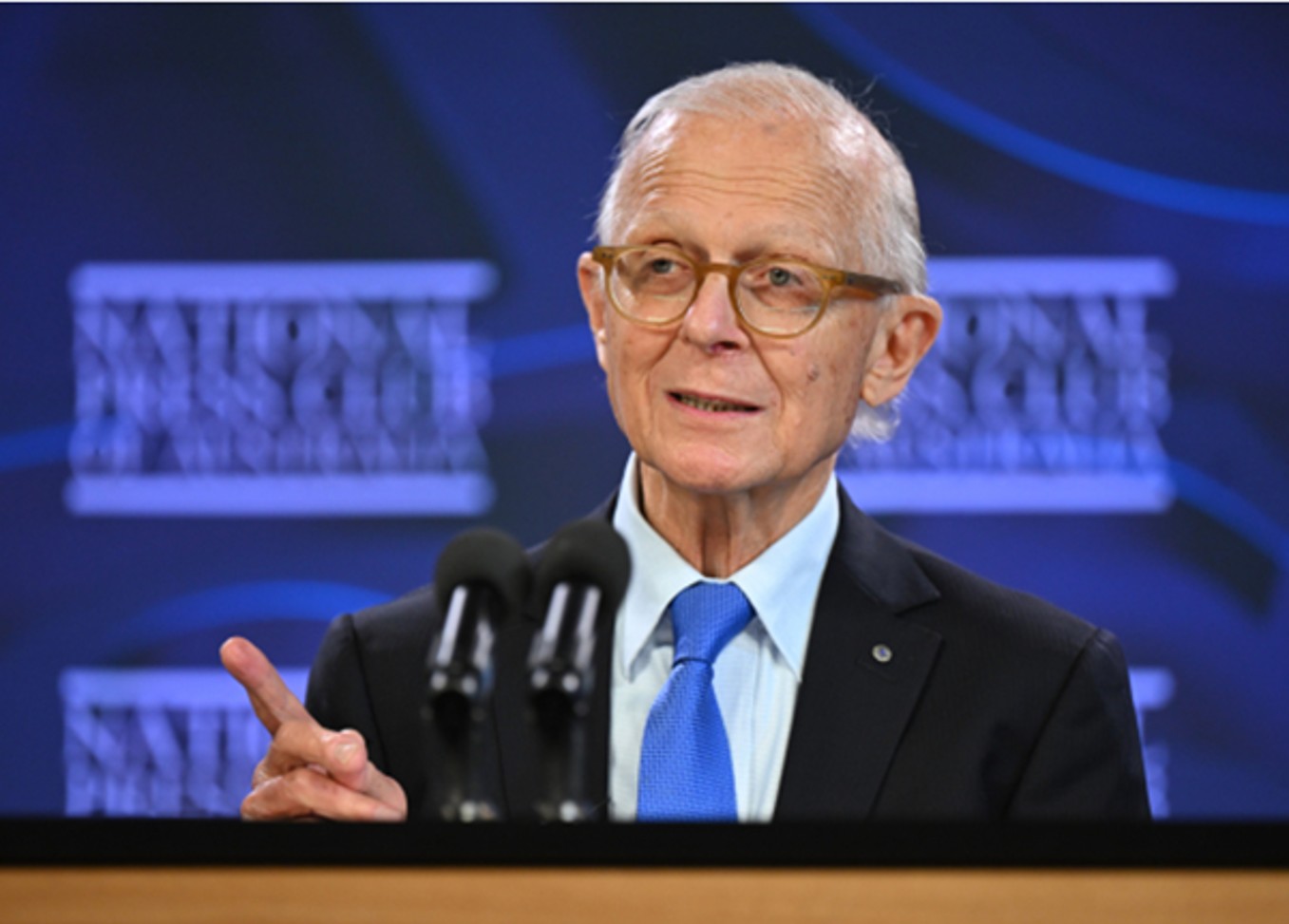
COTA's “State of the Older Nation" 2025 launched
Christopher Pyne, COTA Australia Chair, Addresses the National Press Club of Australia on “State of the Older Nation".

Free online presentations - March Topics
- Mar 03 Useful tips for your Android phone
- Mar 19 iPhone basics
- Mar 24 Protect yourself against scams

Scam alert: Qantas impersonation scam
9 Feb 2026 - Scammers are impersonating Qantas in emails and text messages to steal your personal information and money. They create a sense of urgency to try and get you to act quickly without checking first.


International Women's Day (IWD) is celebrated globally each year on 8 March. It's an important day to recognise the social, economic, cultural and political achievements of women and girls.


Help Us Keep Advocating for Fairness in Retirement Villages
Thank you for being a valued member of the Retirement Village Residents Association (RVRA) - or for considering membership. Our members' support has helped us continue advocating for fair treatment, stronger protections, and better representation for residents across New South Wales.
As you know, while most retirement village operators do the right thing, there are still many cases where residents are left vulnerable—facing unfair fees, poor communication, or inadequate dispute resolution.
With limited government resources and many competing priorities, retirement village concerns are often pushed to the side.
That’s why we are requesting your help.
A donation to the RVRA will directly support our work, including:
- Advocating for legislative reform
- Providing information and advice to residents
- Engaging with government and village operators
- Giving residents a stronger collective voice
You can donate online (either direct through our website or using GiveNow) at:
👉 https://www.rvra.org.au/donate
Every donation—no matter the size—helps us remain independent, effective, and committed to protecting the rights of all residents.
Thank you again for being part of this important association. Together, we can ensure retirement villages remain places of safety, fairness, and respect.
On behalf of the RVRA Board - thank you for your support.
Kind regards
Roger Pallant
RVRA President

The RVRA appreciates the support of the following professional services organisations.
To become a Supporter of the RVRA, contact us.