
From The President's Desk
Snippets From The Board
Information: The Consumer Price Index - March 2026.
Support At Home Survey
FAQs: Village Budgets & The AMP
Village Initiatives: A Village in Pictures
Mediation - An Alternative Solution
ANZAC Memorial
Caring For a Partner With Dementia: Navigating The Journey Together
FYI - Important Information Links: ID Support NSW, Cancer Council, Compass, Scam Alert, Be Connected
Help Support YOUR Association - for the future
RVRA Supporters
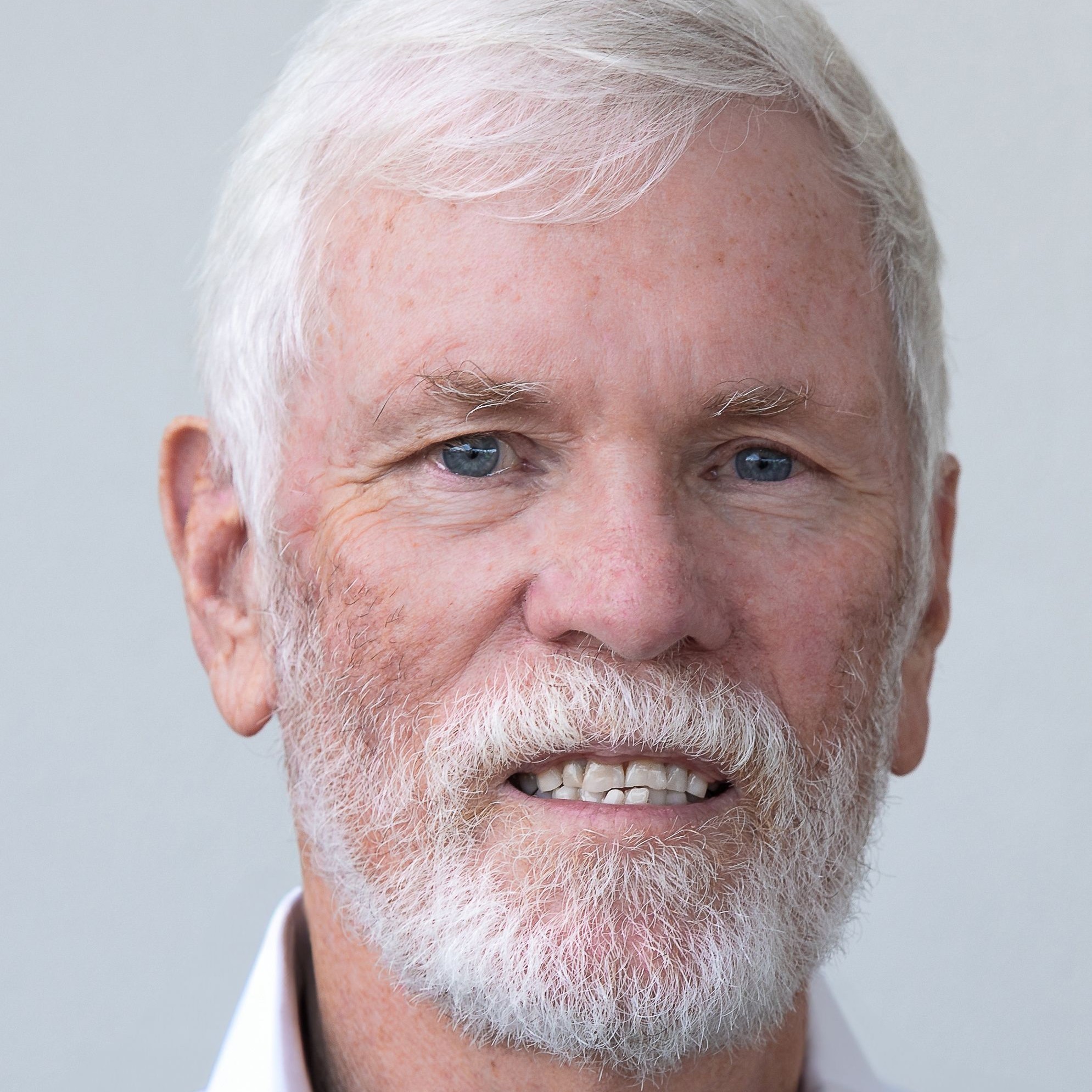
Hi everyone
As we move further into 2026, there is no shortage of important issues affecting residents in retirement villages across New South Wales. From the ongoing rollout of aged care reforms to the annual budget process within villages, it is a time when staying informed and engaged has never been more important.
One of the most significant developments continues to be the transition to the new Support at Home program.
While the intent of these reforms is to simplify and improve access to care services, many residents are still experiencing uncertainty. Questions around eligibility, waiting times, service levels, and costs remain common. The RVRA is actively monitoring these developments and advocating for clearer communication and fairer outcomes for residents.
At the same time, we are hearing increasing concern about the interaction between retirement village living and Commonwealth Rent Assistance. As many of you know, residents in leasehold villages are generally not eligible for rent assistance due to the way these arrangements are classified. This continues to raise important questions of equity, particularly for residents facing rising weekly charges. We will continue to raise this issue with government as part of our broader advocacy work.
Closer to home, the annual village budget process is now underway. This is a key opportunity for residents and committees to engage constructively with operators. Understanding what is driving cost increases, distinguishing between operational and capital expenses, and asking informed questions are all essential. A well-informed resident group is in a much stronger position to ensure transparency and accountability.
I would also like to acknowledge the vital role that Residents Committees play across our villages. Your efforts in representing fellow residents, engaging with management, and helping to build a sense of community are invaluable. The work is not always easy, but it makes a real difference.
Over the coming months, the RVRA will be undertaking further consultation with residents through surveys and direct engagement. Your input is critical in shaping our advocacy priorities and ensuring that we are speaking with a strong and informed voice.
Finally, I encourage all residents to stay connected — attend meetings, ask questions, and support one another. One of the great strengths of village life is the sense of community, and that has never been more important than it is today.
Thank you for your continued support.
Roger Pallant
RVRA President

During April members of the Board met with:
- Fair Trading,
- the Council on the Ageing,
- the Retirement Living Council,
- Ageing Australia,
- the NSW Property Council, and various Operators.
Members' Enquiries in March
March 2026 was a busy month for enquiries.
- Board members answered 48 enquiries from members in 39 villages.
- The total number of Call Topics under each of our 7 Categories added up to 143.
- The largest number of call topics were Residents Committees (40), Legal and Legislation (29), and Finance and Budgets (27).
As we are approaching Village Budget meetings, not surprisingly many of the enquiries were on Budget matters.
Remember to contact Cathy, our Calls Operator with your enquiry in the first instance on 1300 787 213 (option 1), or by emailing calls@rvra.org.au. We will try to get a Board member back to you as fast as possible but do be patient.
Village Visits
During March our Board members visited several villages in the Sydney metropolitan area. If you wish your village to be included in the Village Visit schedule, please contact Cathy on 1300 787 213 (option 1) if you have not already done so. Remember, we can schedule a Zoom visit for your residents if you are in a regional area.
The Monthly Bulletin
This edition of the Bulletin includes a new section on Village Initiatives – those ideas and projects in retirement villages making a difference. This is your chance to write in and tell us about the wonderful events and activities taking place in your village, and to learn about what is happening in other villages.
This month we highlight Closebourne Village and a project started in 2013 and continuing to this day. It documents the life of the village in a photographic yearbook, capturing all of those happy moments which make our village communities so special. If you have a village story to tell, we are waiting to hear from you – just call Cathy on 1300 787 213 (option 1) and she will arrange for the Bulletin to call you to discuss it.
As villages remember the ANZACs, this edition also contains an uplifting article describing the conversion of the top of an inground water tank in a retirement village into a veterans memorial.
May is Dementia Awareness Month.
According to Dementia Australia, there are an estimated 446,500 people in Australia living with dementia, many living in retirement villages. Caring for a partner with dementia is physically demanding and mentally exhausting with a sense of loss which can become overwhelming. This month’s Bulletin article offers some tips on surviving this journey.
Support at Home Survey
We invite you to take part in a short survey about your experiences with the new Support at Home program. The survey is quick, confidential, and easy to complete. Just click on the link.
The Board and Staff of the RVRA wish all mothers a very happy Mother’s Day on Sunday 10th May.
💐💐💐💐

It’s Budget Time!
On Wednesday 29th April 2026 the Australian Bureau of Statistics announced the Consumer Price Index. The CPI of interest for Retirement Village recurrent charges variation is the Sydney (All groups) CPI, and the increase for the year ending 30 March 2026 is:
4.4% per annum
To help you and Residents Committees to navigate the budget season and to stay on top of your village budget, see the following links:
A Budgetary Process Guide and other budget related articles, are available on the Education webpage.
- Retirement Village Education Centre - https://www.rvra.org.au/education/budget-guide
All RVRA members also have access to 35 Information Sheets in the Members Area of our website.
- Information Sheets on Village Finances = IS26 to IS34 - https://www.rvra.org.au/members-only/rvra-information-sheets
The new Support at Home program took effect in Nov 2025. This has impacted many residents who receive support services to allow them to live independently.
We are now conducting a survey to find out about your experiences and to get your feedback.
This survey is your opportunity to:
- share where you are in the Support at Home journey
- tell us whether you are receiving the services you need
- highlight any challenges, delays, or costs you are facing
The survey is anonymous and you cannot be identified by your answers.

Why is your input important?
Your feedback will help us to:
- better understand what residents are experiencing right now
- identify gaps and emerging issues
- advocate more strongly on your behalf to government and decision-makers
Who is conducting the survey?
This survey is a joint initiative of the associations that represent retirement village residents across Australia. These independent, resident-focused organisations work to protect and promote the rights and interests of residents by advocating to government, regulators, and industry bodies, while also providing information and practical support to individual residents and residents’ committees.

The most common questions the RVRA has been receiving recently about village budgets and the Asset Management Plan (AMP) focus on transparency, accuracy, cost implications, and how practical and user-friendly the documents are.
Here are three commonly asked questions:
1. Why do our recurrent charges go up each year?
The amount residents pay in recurrent charges is a reflection of what it costs the Operator to run your village for the year. When your costs increase, it is usually because of rising operating costs in areas like insurance, utilities, staffing, maintenance, and compliance.
The operator must give brief written reasons for any increase and show how the numbers were calculated.
2. How can we check whether the budget is accurate?
Start by comparing costs with last year and looking for variations. Residents can then request supporting information, such as:
- Quotes or invoices
- Utility bills
- Maintenance schedules
- Explanations for large increases
Comparing the budget with quarterly accounts is one of the best ways to spot errors or double‑charging.
3. How does the AMP affect our budget?
The AMP is designed to assist in budget preparation by outlining predicted repair/maintenance costs to be included in the annual budget for the coming year. It also provides information on when an asset is due to be replaced at the Operator’s cost. It helps the operator plan for:
- Capital maintenance
- Capital replacement
- Long‑term maintenance costs
Next month, we’ll review some of the questions posed about what to do after the annual budget is issued to residents, what meetings are required and so on.
Capturing Community Life
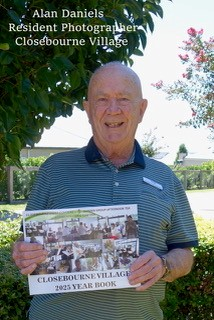
In every community there are people who quietly preserve its story — the everyday moments that might otherwise fade with time. At Closebourne Village, resident Alan Daniels has taken on that role, documenting village life through an annual photo book that has become a cherished record of the community.
The project began in 2013, when fellow resident Phil Lloyd proposed creating a yearbook for the village. Working together, Phil and Alan produced the first edition, and their partnership continued through to 2018. During those early years, the books began to build a visual narrative of the village’s activities, milestones and shared experiences.
Since 2019, Alan has carried the project forward on his own, taking on the roles of photographer, editor and publisher. Using his Sony RX100 camera, he captures a wide range of moments throughout the year — from major celebrations to small, everyday gatherings that reflect the rhythm of life in the village.
Image shows: Alan Daniels - Resident Photographer Closebourne Village, with an example of a yearbook.
Back at his computer, Alan carefully organises and edits the images using ACDSee Photo software. He compiles the book month by month, creating a chronological record of events both inside and beyond the village. Once complete, the book is printed through Snapfish, ready to be shared with fellow residents.
“I create the photos by month as a record of activities inside and outside the village,” Alan explains.
The resulting books offer a vivid snapshot of community life. They include festive occasions such as Australia Day, St Patrick’s Day, Easter celebrations, Halloween and Melbourne Cup events. More reflective moments are also captured, including the ANZAC Day dawn service and Australia’s Biggest Morning Tea.
Alongside these are the everyday activities that bring residents together: walking groups exploring local paths, mystery bus trips, trivia afternoons and discussion forums where ideas are shared. Social connections are further highlighted through happy hours, ladies’ gatherings, musical performances and the contributions of the village choir, Closebourne Sings.
The books also document key milestones and events, from the Residents Committee formation at the annual general meeting to 90th birthday celebrations and preparations for competitions such as the Keyton calendar and Keyton Cup. The year concludes with the festive season — Christmas lunches, carols, light tours and New Year’s Eve celebrations — providing a fitting end to each annual story.
Alan works consistently throughout the year, compiling photos as events unfold. By the time New Year celebrations are complete, the book is ready to be sent to print — often timed to take advantage of end-of-year discounts. Each copy typically costs around $70 to produce.
This year, Alan plans to enhance the books by enlarging the images, making them easier for residents to enjoy. While this may increase the cost to around $100 per copy, the improvement reflects his ongoing commitment to making the books accessible and meaningful.
For many residents, these photo books have become treasured keepsakes — a way to revisit shared experiences and celebrate the sense of community that defines village life. What began as a simple idea between two residents has evolved into a lasting visual history, captured one photograph at a time.

Retirement villages are designed to offer comfort, community and security during later life. Many are vibrant, supportive environments where residents enjoy social connection and shared amenities. However, like any close-knit community, retirement villages can also experience conflict.
When disagreements arise—whether between residents, or between residents and management— mediation can play a vital role in restoring harmony and preserving relationships.
Retirement villages bring together people from diverse backgrounds, life experiences and expectations. Residents may have strong views about how their community should be run, how facilities should be used, or what constitutes respectful behaviour. At the same time, management teams must balance operational requirements, legal obligations and the needs of the broader community.
Conflicts may escalate quickly in an environment where people live in close proximity and interact frequently. Left unresolved, disputes can create tension, stress and even social isolation. In retirement settings, where wellbeing and quality of life are paramount, prolonged conflict can have significant emotional and psychological consequences. Mediation provides a structured, neutral process that allows parties to address issues constructively before they damage the fabric of the community.
Common Problem Areas In Retirement Villages
1. Resident vs. Resident Disputes
Personality clashes are one of the most common sources of conflict. Noise complaints, parking disputes, pet policies, use of communal areas, and misunderstandings over boundaries can all trigger friction. In some cases, long-standing grievances or gossip can deepen divides between neighbours.
In a retirement village, residents cannot simply "move on" easily; their homes, friendships and support networks are embedded in the community. Mediation offers a way to clear misunderstandings, improve communication and rebuild neighbourly relationships.
2. Resident vs. Management Disputes
Disagreements between residents and management can arise over service fees, maintenance responsibilities, rule enforcement, or changes to village policies. Residents may feel unheard or believe that decisions are being made without adequate consultation. Management, on the other hand, may feel constrained by regulatory requirements or financial limitations.
These disputes can become highly personal, particularly if residents perceive a loss of autonomy or fairness. Mediation creates a forum where concerns can be voiced respectfully and management can explain constraints transparently. This process often leads to practical solutions that formal complaints procedures or legal action cannot achieve.
3. Governance and Committee Conflicts
Many retirement villages have residents committees. Differences in leadership style, decision-making processes or strategic direction can lead to factionalism. Mediation helps clarify roles, improve governance practices and restore collaborative working relationships.
The benefits of mediation
Mediation offers several distinct advantages in the retirement village context:
- Preservation of Relationships: Unlike adversarial processes, mediation focuses on collaboration rather than blame. This is crucial in communities where ongoing interaction is unavoidable.
- Confidentiality: Discussions in mediation are private, encouraging openness and honesty without fear of public embarrassment.
- Cost-Effectiveness: Legal proceedings can be expensive and time-consuming. Mediation is typically faster and far less costly.
- Empowerment: Residents retain control over the outcome. Rather than having a decision imposed by a tribunal or court, the parties craft their own agreement.
- Emotional Wellbeing: By addressing conflict early and respectfully, mediation reduces stress and promotes a sense of safety and belonging.
Ultimately, retirement villages thrive on cooperation and mutual respect. While conflict is inevitable in any community, it does not have to be destructive. Mediation provides a practical, humane and effective pathway to resolving disputes – helping to ensure that retirement living remains focused on comfort, dignity and community connection.
Len Mahemoff OAM
RVRA Board Member
From a Water Tank Top to a Veterans Memorial
The RSL Lifecare Kingsford-Smith Village in the Hawkesbury is where a water tank top has been transformed to a place of commemoration.
Pre 2023, on Anzac Day and Remembrance Day, the village residents gathered in a car park to remember the sacrifices made by Australia, New Zealand and Allied Forces in all conflicts. In 2022, Twenty resident veterans decided to become a recognised group called KSVVG (Kingsford-Smith Village Veterans Group), and it was soon decided that a memorial was needed in the village to honour past and present veterans.
Key Figures
- Bob Croucher - Founding Coordinator (who has since passed away) initiated the conversations between the Veterans group and the village manager.
- Ron Searle - Stage 1 project plan, costing and management
- Frank Holland - Stage 2 project plan, costing and management
Funding
An application was submitted to RSL Lifecare through the Village Manager Louise Haeussler promising that the KSVVG would cover all construction costs. The Village Manager was a staunch supporter of the concept and our biggest advocate. The total cost of the project was approx. $84,000, which does not include considerable voluntary labour. The funding included significant donations from KSVVG members, including a large donation from a KSVVG member, Trevor Hitchcock RN. Sadly, Trevor passed away on the very day the Memorial Wall was dedicated.
Other major contributors were RSL Lifecare, Windsor and Richmond RSL Sub-Branches, Panthers Sports Club and Bendigo Bank.
The Project
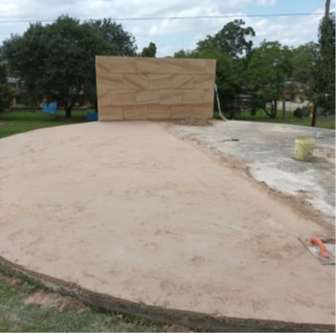
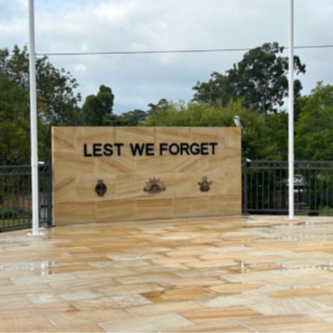
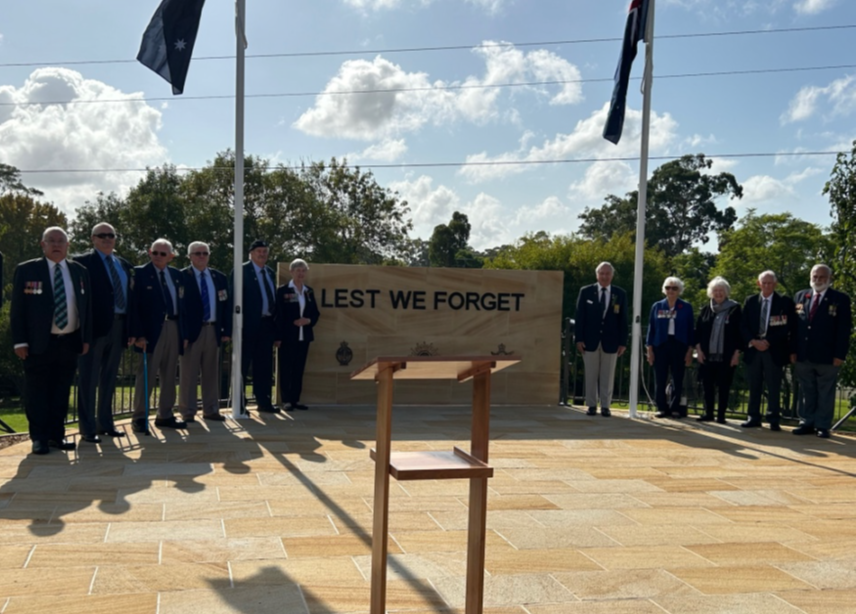
Stage One of the project involved sandstone paving of the water tank and construction of the ANZAC memorial wall.
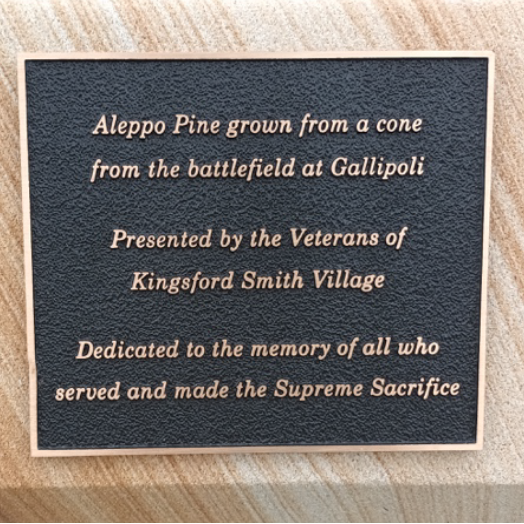
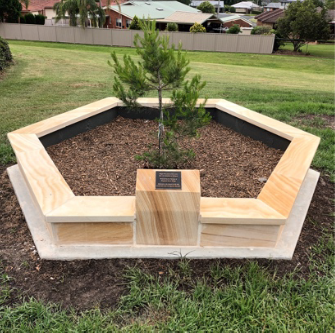
Stage Two of the project was the construction of memorial gardens which included the planting of an Aleppo Pine, a successor of the Lone Pine of Gallipoli fame.
Conclusion
The project was approved on 21 November 2022 and was fully operational for the Dedication Service on 11 April 2023, to which were invited all residents, RSL Lifecare Officials, donors and contributors.
On 25 April 2023, the first ANZAC Day Ceremony was conducted at the Memorial, and was a huge success, with many Village residents in attendance.
On completion Kingsford-Smith Village Memorial Wall Precinct was handed over to RSL Lifecare classified as a village asset. The project was an excellent example of a cooperative effort between RSL Lifecare and the KSVVG.
The photos below show the progression of the project to completion...

Caring for a partner with dementia is one of the most challenging and emotional journeys a person can face. It is a role that often begins gradually, but over time can become physically demanding, mentally exhausting, and deeply personal.
One of the greatest challenges is the sense of loss that comes with the progression of conditions such as Dementia.
While your partner is still physically present, changes in memory, personality, and communication can feel like losing the person you once knew. This “living grief” can be confronting and is often accompanied by sadness, frustration, and even guilt.
Day-to-day care can also become increasingly complex. Simple routines such as dressing, preparing meals, or managing medications may require support. As the condition progresses, carers often take on responsibility for finances, appointments, and personal care. This can lead to fatigue and burnout, particularly if the caring role is around the clock.
Communication is another common difficulty. A partner living with dementia may struggle to find words, follow conversations, or understand instructions. This can lead to confusion and, at times, agitation. For carers, it requires patience and a willingness to adapt — using simple language, maintaining eye contact, and allowing extra time can make a meaningful difference.
Social isolation is also a significant issue. Many carers find their world becomes smaller as their partner’s needs increase. Activities once enjoyed together may no longer be possible, and friends may drift away, unsure how to respond. Over time, this isolation can take a toll on emotional wellbeing.
Despite these challenges, there are ways to make the journey more manageable.
Firstly, it is important to accept support. Reaching out to family, friends, or local services can provide much-needed relief. Even small breaks can help restore energy and perspective. In Australia, organisations such as Dementia Australia offer practical advice, education, and support services tailored to carers.
Establishing a routine can also help both you and your partner feel more secure. Familiar patterns in daily life can reduce anxiety and confusion. At the same time, try to remain flexible — what works one day may not work the next.
Looking after your own health is essential, not optional. Regular check-ups, maintaining a balanced diet, getting enough rest, and finding time for activities you enjoy are all critical. Caring is a long journey, and your wellbeing matters just as much.
It can also help to focus on what your partner can still do, rather than what has been lost. Moments of connection — a shared smile, a familiar song, or a quiet walk — can still bring comfort and meaning.
Finally, remember that you are not alone. Many others are walking a similar path, and support is available. Seeking help is not a sign of weakness, but of strength and care — for both your partner and yourself.
Roger Pallant
RVRA President
For more information - https://www.dementia.org.au/
Also see article below from Compass about 'What are the latest advances in dementia diagnosis?'

ID Support NSW
Has someone stolen your Identification? Do you want to learn about data breaches, scams and cybersecurity? We make it easier for you to find the right support and advice.

Australia's Biggest Morning Tea
In 2026 this is officially held on Thursday, 21 May 2026, with events occurring throughout May and June to raise funds for the Cancer Council. Participants can register to host events at home, work, or in the community to support cancer research and services, aiming for a cancer-free future.
https://www.biggestmorningtea.com.au

What are the latest advances in dementia diagnosis?
Techniques to diagnose dementia have advanced rapidly in recent decades.
We spoke to Dementia Australia Honorary Medical Advisor Professor Michael Woodward about how the tools to diagnose dementia have improved, as well as the new advancements he hopes will allow more people to receive a timely diagnosis.
https://www.compass.info/news/article/what-are-the-latest-advances-in-dementia-diagnosis

Scam Alert: Watch Out For Mobile Fraud
7 Apr 2026 - Criminals are committing fraud by taking control of mobile phone numbers or making unauthorised changes to phone accounts. Once they gain access to your phone, they can receive verification codes, reset passwords, restrict access to your systems, and get access to a wide range of services that rely on your mobile number for security checks
https://www.scamwatch.gov.au/about-us/news-and-alerts/scam-alert-watch-out-for-mobile-fraud


Help Us Keep Advocating for Fairness in Retirement Villages
Thank you for being a valued member of the Retirement Village Residents Association (RVRA) - or for considering membership. Our members' support has helped us continue advocating for fair treatment, stronger protections, and better representation for residents across New South Wales.
As you know, while most retirement village operators do the right thing, there are still many cases where residents are left vulnerable—facing unfair fees, poor communication, or inadequate dispute resolution.
With limited government resources and many competing priorities, retirement village concerns are often pushed to the side.
That’s why we are requesting your help.
A donation to the RVRA will directly support our work, including:
- Advocating for legislative reform
- Providing information and advice to residents
- Engaging with government and village operators
- Giving residents a stronger collective voice
You can donate online (either direct through our website or using GiveNow) at:
👉 https://www.rvra.org.au/donate
Every donation—no matter the size—helps us remain independent, effective, and committed to protecting the rights of all residents.
Thank you again for being part of this important association. Together, we can ensure retirement villages remain places of safety, fairness, and respect.
On behalf of the RVRA Board - thank you for your support.
Kind regards
Roger Pallant
RVRA President

The RVRA appreciates the support of the following professional services organisations.
To become a Supporter of the RVRA, contact us.